Image Copyright Provence-Web
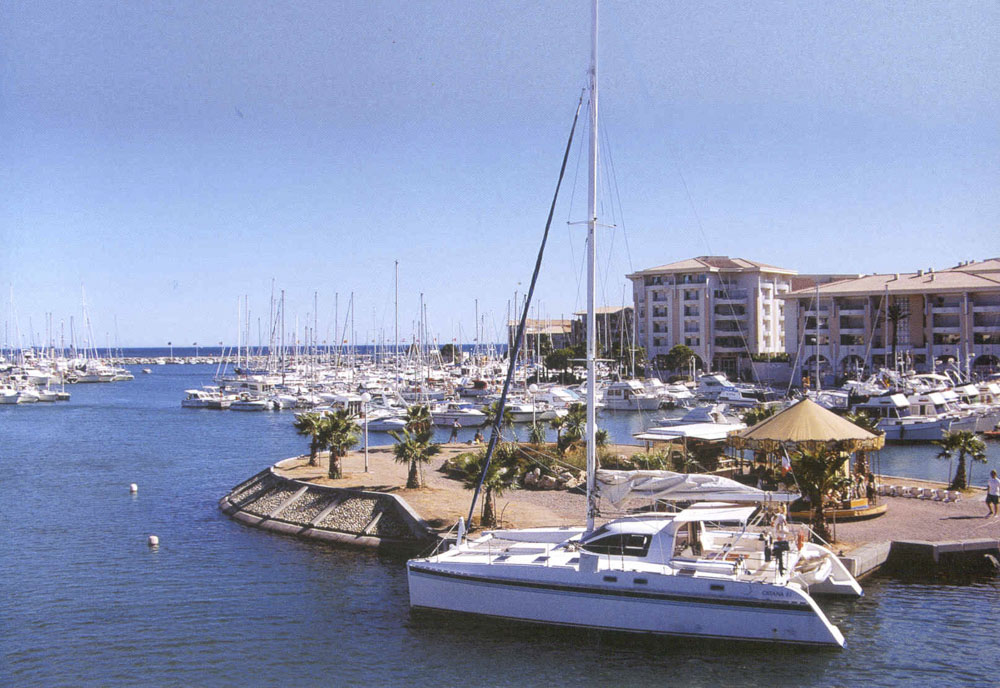
Frejus-Plage at Fréjus is one of the truly special sights of the Var, sometimes called the Provencal Pompeii. As well as its Roman monuments, it has also has an exceptionally fine and well preserved cathedral ensemble. All can be enjoyed at any time of year but would be best appreciated in the quieter months with fewer crowds. The main town of Fréjus is about a mile inland from the coast, though it does have its own beach, modern resort to the east, with a long sandy beach as well as a large marina. This was originally the harbour of Fréjus, but it began silting up as early as the 10th century.
Book a Hotel in Frejus
Rent a Luxury Mas or Villa in Provence

Rent an Apartment or Villa on the Côte-d’Azur

Architecture
Frejus is the oldest Roman city in Gaul, founded and named after Julius Caesar in 49 BC. It was once the most important port after Marseille and was on the Aurelian Way, the great Roman road between Italy and Spain. Some of the walls and remains of the gates of the Roman city can still be seen, including the Lantern d’Auguste, the tower which once guarded the old port. The Porte de Rome stands at the end of the original aqueduct that supplied the city with water and you can still see traces of the channels and arches on its 40km journey through the countryside. There are also fragments of a 1st century theatre, where performances are still held. Best of all is the Arena, which once accommodated 6000 spectators and continues to be used today for bullfights and musical events.
Cite Episcopale
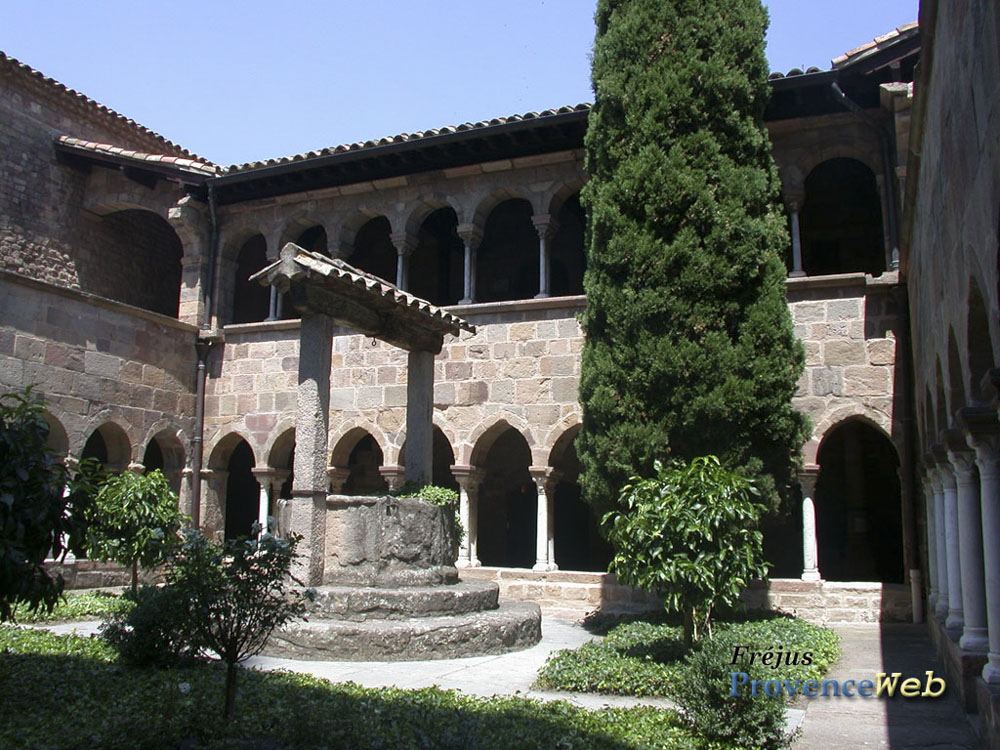
Today the most lively part of town is the medieval centre, a charming ensemble of pastel painted houses, 19th century mansions and cafes clustered round the Cité Episcopale. This is a fortified cathedral close. The cathedral itself is an early example of Provencal Gothic and has elegant 12th -13th century cloisters, with beautiful painted ceilings. Opposite the cathedral is the 5th century baptistry, the oldest in France. It is of octagonal construction, built from Corinthian columns pilfered from the Roman forum. Recent excavation has revealed the pool itself surrounded by white marble paving. The Archaeological Museum can be found on the first floor, with its collection of Gallo-Roman antiquities found during the excavations of Fréjus, including statues of marble and bronze and rare mosaics.
Chapelle Notre Dame de Jerusalem
Several more intriguing sights beckon around Fréjus: the Villa Aurelienne, a Palladian house amidst large gardens; the Pagode Bouddhique Hong Hien, a Buddhist pagoda built by Vietnamese soldiers who fought in France in 1917, and the Mosquée de Missiri, built for Sudanese troops in the 1920s. There is also the Chapelle Notre Dame de Jerusalem, romantically positioned on top of a hill in the forest to the north, in quartier La Tour de Mare. The tiny chapel, the last building to be designed by artist Jean Cocteau, with an atrium, stained glass and frescoes, is best seen illuminated by the setting sun.
Markets and Fetes
Market day : Friday
Fête: 15 August
Every March – Carnival des Enfants
Every April – Fête des Plantes
Every Easter April – Pâques à Saint-Aygulf (Easter)
Every June – Fête de la Musique
Every July – Les Nuits Auréliennes
Every July – Les Nuits de Feu (fireworks)
Every August – Fête du Raisin
Every August – Les Nuits de Feu (fireworks)
Every September – Omelette Géant – giant omelette festival
Every November – Festival de l’Air et du Vent (air and wind festival)
Every December – Foire aux Santons
Copyright © 2011 Rosemary Bailey
Copyright Images : Informationfrance 2011